When you prepare for kitchen remodel work with children and animals in the house, you need a detailed plan that goes beyond simply choosing new cabinets. The dust, noise, blocked access, and open work zones create genuine safety risks and daily inconveniences that can overwhelm unprepared families. Setting up temporary systems for meals, establishing physical barriers around the work area, and planning age-appropriate roles for kids will turn a potentially chaotic experience into a manageable project your family can navigate together.
Why Family Logistics Matter as Much as Design Choices
Most homeowners spend weeks selecting tile patterns and countertop materials but give little thought to where the family will eat breakfast during demolition week. Your kitchen serves as the hub of daily life. When that hub shuts down for weeks or months, every routine gets disrupted. Kids need predictable meal times. Pets need secure spaces away from power tools and open doorways. Without a thoughtful transition plan, even a beautifully executed renovation becomes a source of family stress.
The most successful projects happen when homeowners think through the temporary inconveniences before the first cabinet gets removed. This means mapping out backup routines, identifying hazards specific to your household, and communicating the plan to everyone who lives under your roof.
Establishing a Functional Temporary Kitchen
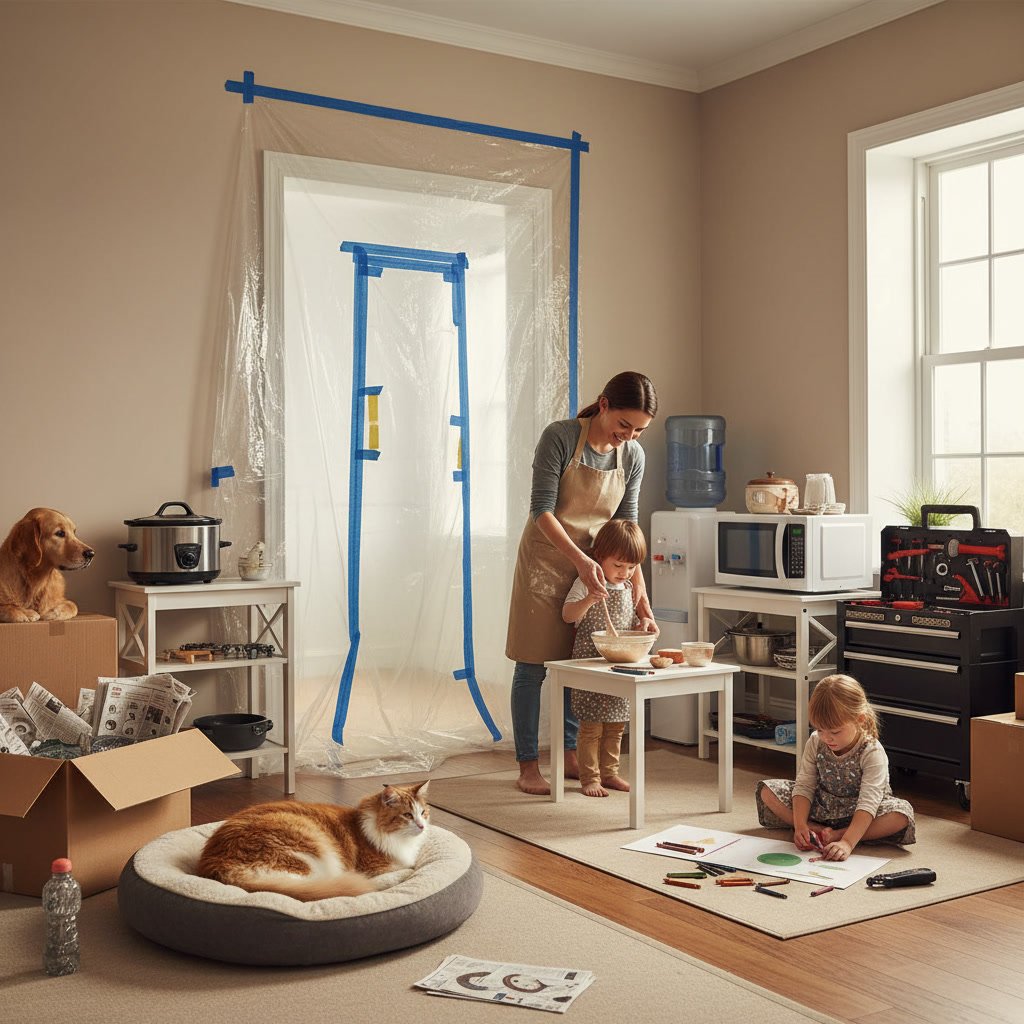
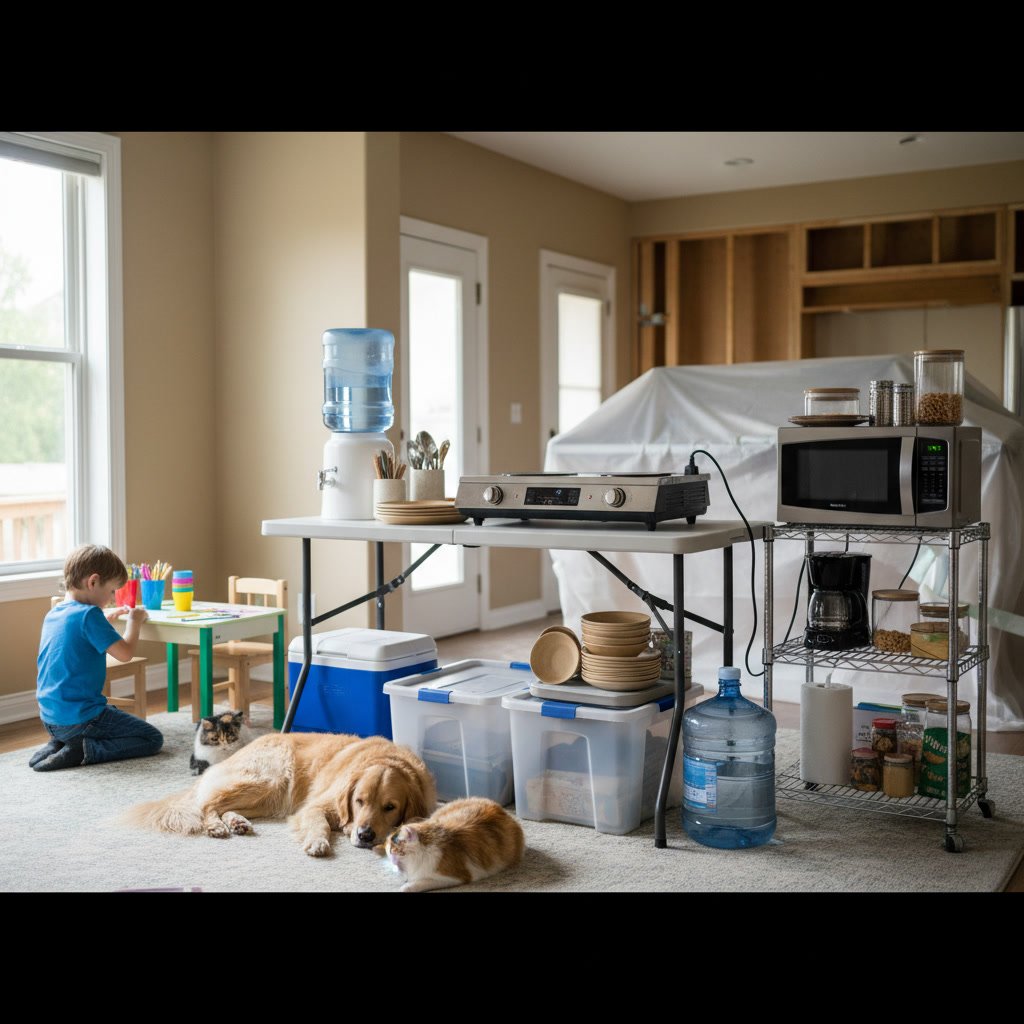
Your temporary kitchen should replicate as many normal functions as possible without getting in the contractor’s way. Choose a location with electrical outlets, running water access, and enough counter space for a microwave, toaster oven, and electric kettle. Many families set up in the dining room, basement, or garage. A folding table, a small refrigerator, and a coffee maker can handle most basic meal prep.
Stock this area with paper plates, disposable utensils, and grab-and-go snacks that require minimal preparation. Keep a bin of non-perishable breakfast items, sandwich supplies, and easy dinner options. This setup reduces trips to restaurants and keeps kids fed on schedule even when the main kitchen is gutted.
Creating Physical Barriers Around the Work Zone
Toddlers and curious pets do not respect verbal boundaries. Physical barriers become essential. Heavy-duty plastic sheeting creates a dust barrier but does nothing to stop a determined three-year-old. Consider adding a baby gate at the kitchen entrance or installing a temporary locking door if the layout allows. Contractors appreciate these barriers too, as they reduce the risk of someone wandering into an active work zone.
Seal off heating and cooling vents in the kitchen to prevent dust from spreading throughout the house. Use painter’s tape and plastic to cover doorways leading to adjacent rooms. The extra 30 minutes spent sealing these gaps will save hours of cleaning later and protect respiratory health for everyone in the home.
Managing Noise and Disruption in Aurora Homes
Demolition and construction generate noise levels that startle pets and interrupt naps for young children. Ask your contractor for a daily work schedule so you can plan around the loudest tasks. If possible, schedule demo days when kids are at school or when you can take pets to a friend’s house for the afternoon.
White noise machines, headphones, and strategic room assignments help older kids focus on homework during construction hours. For pets, create a quiet retreat in a back bedroom or finished basement with their bed, toys, and water bowl. Close the door during the noisiest work to give them a true refuge.
Five Safety Protocols Every Family Should Follow
Construction sites contain real hazards. Implementing these five rules protects everyone in your household:
- Establish a no-entry rule for the kitchen during work hours, enforced for kids and pets without exception.
- Secure all tools, chemicals, and building materials at the end of each work day, even if your contractor typically leaves things out.
- Cover or remove any nails, screws, or sharp debris immediately when spotted outside the work zone.
- Keep pets on leashes or in closed rooms when contractors arrive and leave to prevent escape through open doors.
- Conduct a daily walkthrough after workers leave to check for hazards before kids and pets have free movement again.
These protocols may feel excessive, but a single trip to the emergency room because a child stepped on a stray nail makes every precaution worthwhile. Consistency matters more than perfection. Even older, responsible kids should follow the same rules to model safe behavior for younger siblings.
Involving Kids in Age-Appropriate Ways
Children handle disruption better when they feel included rather than sidelined. Younger kids can help choose paint colors for an accent wall or pick out cabinet hardware from a pre-approved selection. Older children might track the project timeline on a calendar, photograph progress each week, or help organize the temporary kitchen setup.
Giving kids small roles reduces anxiety about the changes happening in their home. It also teaches them how major projects unfold, turning the renovation into an educational experience. Just be sure any involvement happens outside active work hours and never inside the construction zone itself.
Planning Meals Without a Functional Kitchen
Three weeks of takeout gets expensive and unhealthy fast. Instead, plan a rotation of simple meals using appliances in your temporary kitchen. A slow cooker, instant pot, and toaster oven can handle soups, casseroles, baked potatoes, and sheet-pan dinners. Prep ingredients on weekends when you have more time and store portions in the temporary fridge.
Batch-cook favorite meals before the project starts and freeze them in single-serving containers. Pasta dishes, chili, and baked chicken reheat well in a microwave. Stock up on fresh fruit, pre-cut vegetables, yogurt, and other items that need no cooking. A little advance meal planning keeps your family fed and your budget intact while the kitchen remodeling progresses.
Managing Pet Routines During Construction
Pets thrive on routine, and construction obliterates it. Dogs may bark at workers, cats may hide for days, and anxious animals sometimes develop behavioral issues. Maintain feeding times and walk schedules as consistently as possible. If your dog normally has kitchen access throughout the day, set up their water and food bowls in the temporary location before work begins so they adjust to the change gradually.
Consider crating anxious dogs during the noisiest work hours or arranging daycare a few days a week. For cats, provide high perches and hiding spots in quiet rooms away from the action. Some pets adjust quickly, while others need extra reassurance and space. Pay attention to stress signals like excessive grooming, appetite changes, or elimination issues, and consult your vet if problems persist.
Coordinating Timelines and Expectations
Most kitchen remodels take longer than initially estimated. Delays happen because of product backorders, unexpected structural issues, or permit processing times. Understanding how to plan a realistic timeline helps you set accurate expectations with your family. Kids especially benefit from knowing how long the disruption will last.
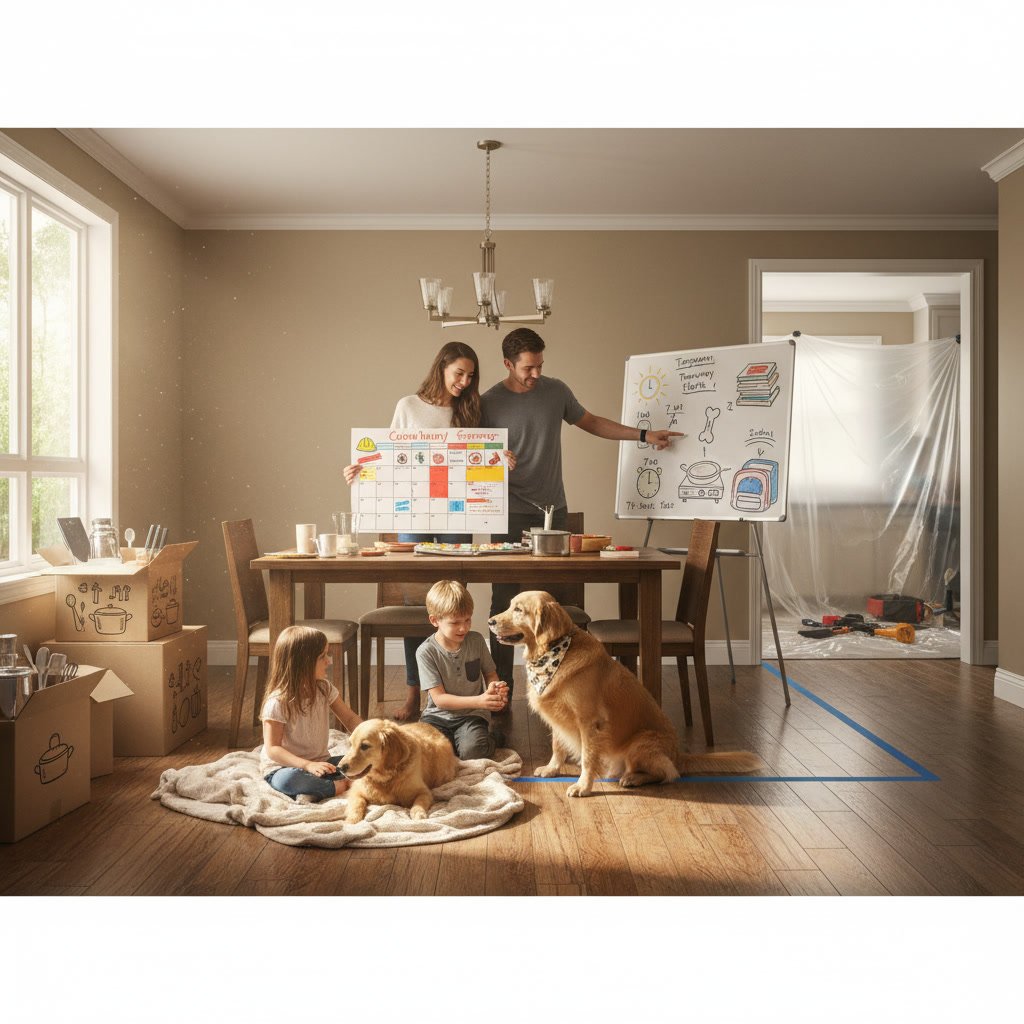
Create a visual countdown calendar for younger children, marking milestones like demo completion, custom cabinetry installation, and final inspection. Celebrate small wins along the way to keep morale high. When delays occur, update the calendar and explain what changed in simple terms. Transparency reduces frustration and helps everyone cope with the extended inconvenience.
Handling the Final Week Before Work Begins
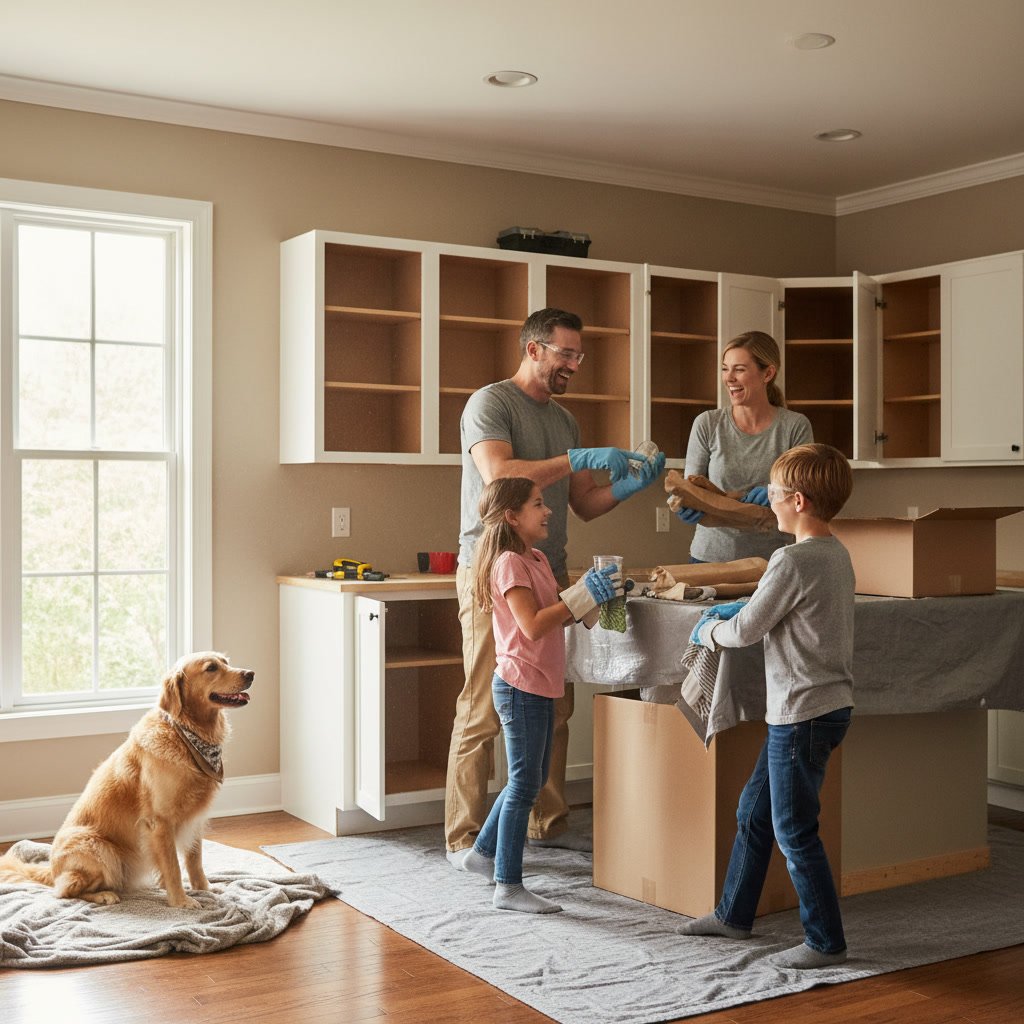
The week before demolition starts is your last chance to prepare thoroughly. Empty all cabinets and drawers, relocating dishes, pantry items, and cookware to the temporary kitchen or storage area. Disconnect and move small appliances. Remove everything from countertops and clear out under-sink storage.
Deep-clean the areas that will be inaccessible during the project. Once construction begins, you cannot retrieve forgotten items without disrupting the work. Label boxes clearly so you can find what you need without unpacking everything. Take photos of the existing space before contractors arrive. These images help you remember the original layout and provide documentation if any issues arise.
Walk through the space with your contractor one final time, confirming the scope of work and identifying any last-minute concerns. Discuss where workers will enter the home, where they can park, and how they will contain dust. Clarify communication preferences so you know how to reach the project lead if questions come up during the work.
Keeping Your Family Comfortable Through Completion
Even with perfect planning, renovation fatigue sets in. Kids grow tired of the disruption. Pets remain on edge. You miss having a functional kitchen. Acknowledge these feelings rather than dismissing them. Schedule fun outings or special activities to break up the monotony of living in a construction zone.
Maintain open communication with your contractor about any family concerns that arise. If dust is spreading more than expected, ask for additional containment measures. If noise during naptime becomes a problem, see if the schedule can shift slightly. Most professionals appreciate feedback that helps them work more effectively around your household.
Remember that the inconvenience is temporary. The finished kitchen will serve your family for years, making the short-term disruption worthwhile. Keep your focus on the end result, and lean on your preparation systems to carry you through the challenging middle weeks.
Successfully managing a kitchen renovation with kids and pets requires advance planning, clear boundaries, and flexible problem-solving. By setting up a functional temporary kitchen, creating physical barriers, maintaining routines, and involving family members appropriately, you can complete the project without sacrificing safety or sanity. Remodel Pros LLC understands the unique challenges Denver-area families face during home renovations and works with homeowners to minimize disruption while delivering exceptional results. If you are ready to start your project with a team that respects your household’s needs, call 7207891999 to discuss your vision and timeline.